River Bend Astronomy Club

Looked Up Lately?
  • Home
  • Resources
  • Gallery
  • Join
  • Events
  • Outreach
  • Contact Us
  • Calendar
  • Club Newsletter
Facebook Google+

Control Panel

  • Log in

Member of The Astronomical League

Member of The Astronomical League

St. Louis, Mo.


73.7°F
Feels like 73.7°F
Mostly Cloudy

Today:
79°F / 59°F
Tomorrow Friday Saturday
72° / 52° 70° / 52° 63° / 52°


Data powered by


Latest Image of the Sun

Latest image from Helioviewer.org.

Recommended Astronomy And Science Links

  • C.S.C. For Carlyle Lake
  • Night Sky Network
  • International Dark Sky Association
  • Globe at Night
  • Astronomy Picture of the Day
  • Space Weather
  • SOHO
  • Cosmoquest
  • St. Louis Astronomical Society
May20

NASA – Galaxy’s Ring of Fire

by Dan Brandon on May 20, 2013

Galaxy Messier 94

How many rings do you see in this new image of the galaxy Messier 94, also known as NGC 4736? While at first glance one might see a number of them, astronomers believe there is just one. This image was captured in infrared light by NASA’s Spitzer Space Telescope. Image credit: NASA/JPL-Caltech › Full image and caption

Johnny Cash may have preferred this galaxy’s burning ring of fire to the one he sang about falling into in his popular song. The “starburst ring” seen at center in red and yellow hues is not the product of love, as in the song, but is instead a frenetic region of star formation.

The galaxy, a spiral beauty called Messier 94, is located about 17 million light-years away. In this image from NASA’s Spitzer Space Telescope, infrared light is represented in different colors, with blue having the shortest wavelengths and red, the longest.

Starburst rings like this can often be triggered by gravitational encounters with other galaxies but, in this case, may have instead been caused by the galaxy’s oval shape. Gas in the ring is being converted into hot, young stars, which then warm the dust, causing it to glow with infrared light.

The outer, faint blue ring around the galaxy might be an optical illusion. Astronomers think that two separate spiral arms appear as a single unbroken ring when viewed from our position in space.

via NASA – Galaxy’s Ring of Fire.

Share this:

 Comment 
May20

Citizen Scientists Track Light Pollution as Humanity Loses Touch with the Night Sky | Observations, Scientific American Blog Network

by Dan Brandon on May 20, 2013

Light pollution and starlight

City skies (right) are often significantly dimmed by sky glow. Credit: Jeremy Stanley

Step out into the darkness a few hours after sunset. What do you see overhead? If you live in a relatively unpopulated part of the world, you might see the broad stripe of the Milky Way splashed against a backdrop of black sky punctuated by countless stars. If, on the other hand, you live in a teeming metropolis, what’s visible might have much more to do with where you find yourself on the planet than where we find ourselves in the galaxy.

Artificial illumination has dramatically changed the night sky across the globe. And considering that more than half of people worldwide live in urban areas—and more than one fifth live in large cities of one million or more inhabitants—light pollution obscures the stars above billions of people.

Since 2006 a project called GLOBE at Night has been quantifying light pollution using the very people it affects as measuring instruments. The project enlists citizen scientists to make naked-eye observations of a given constellation, then compare what they see with a series of star charts calibrated for different levels of light pollution. Participants submit their observations via an online form. The GLOBE at Night’s most recent campaign, for 2012, gathered nearly 17,000 observations from participants in 92 countries. (The 2013 campaign is still accepting data for a few more weeks.)

via Citizen Scientists Track Light Pollution as Humanity Loses Touch with the Night Sky | Observations, Scientific American Blog Network.

Share this:

 Comment 
May19

NASA – NASA’s Asteroid Sample Return Mission Moves into Development

by Dan Brandon on May 19, 2013

This narrated video provides an overiew of the OSIRIS-REx mission to observe asteroid Bennu and retreive a sample for study on Earth.For complete transcript, click here.

Credit: NASA’s Goddard Space Flight Center

NASA’s first mission to sample an asteroid is moving ahead into development and testing in preparation for its launch in 2016.

The Origins-Spectral Interpretation Resource Identification Security Regolith Explorer (OSIRIS-REx) passed a confirmation review Wednesday called Key Decision Point (KDP)-C. NASA officials reviewed a series of detailed project assessments and authorized the spacecraft’s continuation into the development phase.

OSIRIS-REx will rendezvous with the asteroid Bennu in 2018 and return a sample of it to Earth in 2023.

“Successfully passing KDP-C is a major milestone for the project,” said Mike Donnelly, OSIRIS-REx project manager at NASA’s Goddard Space Flight Center in Greenbelt, Md. “This means NASA believes we have an executable plan to return a sample from Bennu. It now falls on the project and its development team members to execute that plan.”

Bennu could hold clues to the origin of the solar system. OSIRIS-REx will map the asteroid’s global properties, measure non-gravitational forces and provide observations that can be compared with data obtained by telescope observations from Earth. OSIRIS-REx will collect a minimum of 2 ounces (60 grams) of surface material.

via NASA – NASA’s Asteroid Sample Return Mission Moves into Development.

Share this:

 Comment 
May17

Kepler Planet-Hunting Mission in Jeopardy: Universe Today

by Dan Brandon on May 17, 2013

A diagram of the Kepler space telescope. Credit: NASA

A diagram of the Kepler space telescope. Credit: NASA

NASA’s Kepler telescope has lost its ability to precisely point toward stars, putting its exoplanet search in jeopardy. One of the reaction wheels –devices which enable the spacecraft to aim in different directions without firing thrusters – has failed. This is of grave concern because last year reaction wheel #2 failed, and now #4 has failed. Kepler scientists say the spacecraft needs at least three reaction wheels to be able to point precisely enough to hunt for planets orbiting distant stars.

“We need three wheels in service to give us the pointing precision to enable us to find planets,” said Bill Borucki, Kepler principal investigator, during a press briefing today. “Without three wheels it is unclear whether we could continue to do anything on that order.”

But the Kepler team said there are still possibilities of keeping the spacecraft in working order, or perhaps even finding other opportunities for different science for Kepler, something that doesn’t require such precise pointing abilities.

via .Universe Today-Kepler Planet-Hunting Mission in Jeopardy.

Share this:

 Comment 
May16

Space Warps [Zooniverse], Citizen Science | Scientific American

by Dan Brandon on May 16, 2013

Courtesy of the Zooniverse

Zooniverse’s Space Warps project calls on citizen scientists to help discover elusive objects in the universe by looking through images that have never before been seen. Computer algorithms have already scanned the images, but there are likely to be many more space warps that the algorithms have missed. Space Warps’ creators think that it’s only with human help that all of them will be found.

Einstein’s theory of gravity, General Relativity, predicted that massive objects, such as stars, would bend the space around them such that passing light rays follow curved paths. Evidence for this theory was first obtained by Arthur Eddington in 1919, when during a solar eclipse he observed that stars near the edge of the Sun appeared to be slightly out of position.

via Space Warps [Zooniverse], Citizen Science | Scientific American.

Share this:

 Comment 
May15

Saturn Is Shaking Its Rings: Scientific American

by Dan Brandon on May 15, 2013

saturn, saturn rings

Image: NASA

Saturn’s rings are such a spectacle that you can see them through even a modest telescope. Made mostly of water ice, the rings contain countless particles, large and small, that orbit the planet in a thin plane. For decades scientists have known that gravitational tugs from Saturn’s many moons imprint patterns on the rings. Now they have discovered a new ring sculptor: oscillations of the planet itself, which promise insight into the interior of the solar system’s second-largest planet.

The discovery came about because of a close inspection of Saturn’s rings. From outermost to innermost, the three main rings are named A, B and C. In 1980, when the Voyager 1 spacecraft flew past, it found grooves in each ring that resemble those on a vinyl record. The gravitational pulls of Saturn’s moons make waves, mostly in the A ring, because that’s the one closest to the moons.

In 1991, however, Paul Rosen, then at Stanford University, and his colleagues used Voyager data to discover waves in the C ring, the one nearest the planet. Although the moons accounted for some of these waves, no one knew what caused the others.

via Saturn Is Shaking Its Rings: Scientific American.

Share this:

 Comment 
↓ Previous Entries

RBAC

The River Bend Astronomy Club serves amateur astronomers from Southern Illinois and the St. Louis Metropolitan area, and beyond, fostering observation, education and a spirit of camaraderie.

Images Taken By Club Members

Jupiter with Io, Ganymede and Europa taken by Joe Lopinot on October 12, 2012. Imaged with AT106 refractor, Imaging Source DK video camera and 2x Powermate; 800 images stacked and aligned with Registax, processed with PhotoshopM81 and M82 in Ursa Major taken by Joe Lopinot on March 23, 2012. AT106 Refractor, Canon 450D, 17 x 3 minutes.

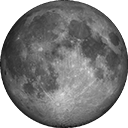
Current Moon Phase


Waxing Gibbous Moon
Waxing Gibbous Moon

The moon is currently in Libra
The moon is 12 days old

Distance: 57 earth radii
Ecliptic latitude: -1 degrees
Ecliptic longitude: 204 degrees
Joe's

Google Translate

| ©2013 River Bend Astronomy Club |